Learning About Accountability In Minneapolis
George Floyd and Renee Good: Killed by System Crashes

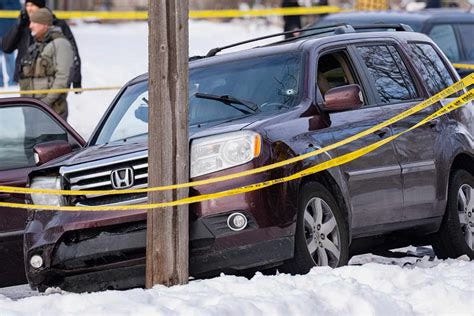
In Minneapolis on Wednesday, about eight blocks from the scene of the murder of George Floyd by police officer Derek Chauvin, a masked ICE agent shot and killed 37-year-old Renee Nicole Good as she responded to ICE demands that she must move her car. An ICE officer placed himself at the front of the car, read her movement as an assault or attempt at escape, and fired through the windshield.
President Trump and Homeland Security Secretary Noem led a chorus of officials and media apologists branding the dead woman a domestic terrorist. In their narratives Renee Good had brought the killing on herself. She deserved it. The officer had fired in self-defense—forced to shoot, in pursuit of his mission to keep Americans safe.
Other commentators have settled down to a frame-by-frame analysis of the compiled surveillance and social media videos that record the encounter.
The focus is tight. We concentrate on five seconds and two decision-makers: the trigger agent and Ms. Good.
This isn’t unusual. As sociologist Diane Vaughan observed in analyzing the space shuttle Challenger launch decision: “[E]rror-reducing activities have concentrated upon the decision-making situation and the individuals who participated in it. Much less attention—if any—is paid to the organizational system and its environment, as they contribute to decision errors.”
But Renee Good’s death didn’t result from the idiosyncratic choices of two individuals. The roots of Good’s death—like the sources of George Floyd’s—lay in a system crash.
The politicians and officials now posturing as vehement defenders of the ICE shooter are not protecting the agent; they are hiding behind him.
Someone—many “someones”—recruited, hired, trained, and acculturated the shooter. Someone defined his mission, supervised him, armed him, and dispatched him. Someone blocked EMT access to the wounded woman after he fired. None of these “someones” planned to kill. If time were reversible, and they were armed with hindsight, all of these “someones” would make a different choice. Even so, any—or all—of them may have contributed to this death.
Whether shooting Good was criminal or not cannot be the end of the inquiry. If the shared goal is to make Americans safe, the only question is whether killing Good was unavoidable. The answer to that question is a simple, unequivocal “No, of course not.”
So then why did it happen? Our reflex is to generate a performance review of the last actors in the chain of events—to ask who zigged when they should have zagged.
But answering that question and punishing one actor while absolving another doesn’t lead to safety. It’s not enough to go “down and in” to understand a split-second event; you also have to go up and out to understand the environment that engulfed the actors. We can’t stop with a performance review of the two protagonists; we need a full event review that explores what conditions and influences convinced the shooter that it made sense to kill. Why did he zig when he should have zagged? Why, for that matter, did Good move her car when and how she did?
We have to confront the possibility that both Good and the agent who shot her were “set up to fail.” To punish (or protect) the ICE agent without examining and addressing the factors that drove his split second “sense-making” guarantees that we will see this tragedy repeated. In aviation, medicine, and other high-risk fields, disasters are treated as “sentinel events”—as the occasion for mandatory analysis. Leaders in those fields see holding themselves “accountable for learning” from tragedies as a minimum moral requirement. Lately, there have been productive efforts in a dozen jurisdictions to mobilize this mindset in criminal justice: to analyze police shootings, wrongful convictions, mistaken releases, riot control failures, and other disasters as “organizational accidents.” These comprehensive, all-stakeholders, efforts have yielded scores of recommendations and reforms.
We need that wider lens. If the idea is to make Americans safer, creating a culture of safety in the criminal system is the most important thing we can do. Limiting ourselves to performance reviews amounts to deciding that we don’t much care if this happens again.
No justice system live can without punishing practitioners’ misconduct. But blaming the ICE agent, or blaming Renee Good (as ridiculous as that is) and then stopping there, leaves everyone at risk. We need disciplinary accountability, but we need “forward-looking accountability” too. And we have to hold ourselves accountable for providing it.
It is very hard to watch the videos of this death without being reminded of George Orwell, quoting Charles Dickens in A Tale of Two Cities:
“It was too much the way... to talk of this terrible Revolution as if it were the only harvest ever known under the skies that had not been sown — as if nothing had ever been done, or omitted to be done, that had led to it — as if observers of the wretched millions in France, and of the misused and perverted resources that should have made them prosperous, had not seen it inevitably coming, years before, and had not in plain terms recorded what they saw.”
We should have seen this coming. Of course, if we don’t do the work of understanding it we’ll find ourselves saying that about the next ICE shooting too. Widen the lens far enough and we ourselves come into view.
It is so tremendously essential for a system so powerful and important as our justice system system to be able to grapple with events that are "sentinel," flagging for us the deep and broad accountability from which tragedy emerges - again and again. Local agencies have adopted a sentinel events approach in order to ensure that "we can’t allow another occurrence like this."
Our U.S. Dept of Justice created a new dawn from which the sentinelevents approach arose: our current DOJ ought not let it slip through its fingers… ever.
Thanks again, Jim, for the bright light on what must be done!