Acquitting "Sandwich Man"
The Jury and its Adversaries

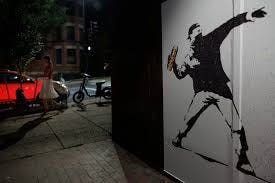
Sean Dunn, a paralegal at DOJ, threw a footlong Subway deli sandwich against the armored chest of Gregory Lairmore, a federal Customs and Border Protection agent who had been “surged” into the District of Columbia by the Trump administration to roust suspected illegal immigrants. Video of the incident went viral. Dunn was fired, and the Trump DOJ attempted to secure a felony indictment against him. A District of Columbia grand jury refused to indict. The U.S. Attorney for the District, Jeanine Pirro, then ordered the filing of a misdemeanor information (which does not require grand jury approval) and Dunn was forced to face that charge. A D.C. trial jury acquitted him of misdemeanor assault.
The media’s coverage of the Dunn “not guilty” verdict was extensive, and as I watched it I found myself thinking of a clarifying moment experienced during the first jury case I defended in Massachusetts. I was an experienced trial lawyer when I moved to Boston to work for Roxbury Defenders. Still, this was a surprise.
Twelve jurors and two alternates were seated in the jury box. My goal during jury selection had been to preserve some diversity in the panel—not necessarily an easy task in Suffolk Superior Court in those days. That much had been accomplished: there were three Black jurors, and, overall, a mix of young and old, men and women. As usual, some jury members looked apprehensive in their alien surroundings; one or two looked irritated and put-upon. Others idly scanned the courtroom, their attention caught by one thing or another.
The clerk stood and asked the jurors to rise. He read the charges; then, in a monotone, directions that I later learned were boilerplate, used at every trial:
Members of the Jury look upon the defendant, and hearken to the charge. Upon each and every of these several indictments, the defendant at the bar has been arraigned, and upon his arraignment has pleaded not guilty, and for trial has put himself upon the country, which country you are. If he is guilty, you are to say so; if he is not guilty, you are to say so and no more. Members of the Jury, hearken to your evidence.
The jurors straightened themselves, stood to attention, and looked intently on the clerk. A moment before, they could have been taken for a random assortment of passengers on a bus or customers in a diner. Suddenly they were a unit—they had become “the country, which country you are.” The weary clerk’s rote incantation had been transformative.
My friend Beth Loftus has always cautioned me against trusting “flashbulb memories,” but I trust this one. I’ve seen versions of it repeated at the beginning of every trial since. It flashed a light on aspects of the criminal process exemplified by the Dunn trial that the Dunn trial coverage—like most everyday criminal justice coverage—obscures.
Maybe you had to be there. I could witness these moments only because I watched from a privileged vantage point. But let me try to explain.
Systematically Adversary
John Griffiths, writing in 1970 to contest Herbert Packer’s magisterial account of an American criminal justice discourse that Packer depicted as confined along an axis between Crime Control and Due Process poles argued that Packer’s famous “two models” are actually variations on a single model—a Battle Model. Griffiths believed that the fundamental issue dividing the partisans for Packer’s Crime Control Model from the advocates for his Due Process Model is “Who wins?” —that is, where the balance of advantage should lie in the zero-sum war between irreconcilables: the state and the accused individual. The Crime Control Model’s adherents dismiss the Due Process Model as an obstacle course crippling the state’s administration of justice. Due Process believers deride the Crime Control Model as a conveyor belt, inexorably bundling individuals off to prison.
Nothing in the media coverage of criminal justice events challenges Griffiths’ analysis. On the contrary, media accounts do their best to wring every last drop of ready-made drama out of stylized battles between the prosecution and the defense. The coverage of the Sandwich Man’s trial followed this blueprint. One side won, the other—Jeanine Pirro’s—lost. It was a contest: like a prize fight, or a football game. The onlookers in the stands were delighted or appalled. That’s how we see things.
And it certainly might seem—both in media accounts and in daily reality—that the practitioners who staff the system behave as if the Battle Model governs. Police and prosecutors are arrayed against defenders and defendants. One side wins; the other side loses. There is something distinctive about this battle.
Although a very small fraction of members of the military experience combat (even in wartime) combat remains the organizing and defining principle of military life. In the criminal system practitioners actually spend their days working to avoid the stylized jury trial combat that might fill that central place in their lives. Prosecutors mobilize every ounce of plea-bargaining leverage they can muster. Defenders dodge and delay. These days, while you can see reports of jury trials on television, the trials that you see are newsworthy because in most courthouses a jury trial has become an almost freakish event—a sign that the system has failed, not the culmination the system is designed to supply. The guilty plea, not the jury trial combat, is modern American criminal justice’s defining event.
This encompassing environment conceals the possibility that you glimpse if you happened to be there watching as I was when a jury is sworn.
Adversariness is not the indispensable core of criminal justice. Adversary presentation is not an end in itself; it is a device, a work-around, developed in service of community sovereignty. The fact is, we have to have adversaries actively presenting and challenging evidence because our preeminent purpose is to exalt the passive factfinder, the jury—the twelve individuals who constitute the emergent voice of the community.
Yes, prosecutors and defenders do battle: I’ve spent my adult life fighting those battles. The practitioners want to win, not lose. But the fact is, that while one lawyer or another might be disappointed by an outcome, neither the state nor the individual benefits from a wrongful conviction. The lawyer v. lawyer skirmishes that dominate everyday routine only matter to the extent that they serve the sovereign community fact-finder.
As John Adams argued to the jury in the Boston Massacre trial (a jury that had been given exactly the opening direction I quoted above):
It’s of more importance to community, that innocence should be protected, than it is, that guilt should be punished; for guilt and crimes are so frequent in the world, that all of them cannot be punished; and many times, they happen in such a manner, that it is not of much consequence to the public, whether they are punished or not. But when innocence itself, is brought to the bar and condemned, especially to die, the subject will exclaim, it is immaterial to me, whether I behave well or ill; for virtue itself, is no security. And if such a sentiment as this, should take place in the mind of the subject, there would be an end to all security what so ever.
Preserving that security is why we have a criminal system, and the acquittal of “Sandwich Man” Sean Dunn is a good example of why the original system design, centering the community jury, is an underutilized bulwark of that security.
The prosecution argued that Dunn, a domestic terrorist, hurled an “exploding” sandwich at “point-blank range.” That’s adversarial advocacy. The jury was not convinced beyond a reasonable doubt. It seems most likely that they were not convinced to a moral certainty that this was anything other than a frustrated, inarticulate jerk expressing his frustration with government overreach in the only way he could.
The Dunn jury’s decision can look like a “defeat” for the prosecutors in the Battle, but it was a a determination that preserves security, not one that threatens it. It is, at least to me, further proof that assigning the paramount role to jurors—to “the country”—is not an expensive archaic, anomaly; it is a crucial support of flourishing communities. The “Sandwich Guy” was not acquitted by an eccentric D.C. jury; he was acquitted by “the country.”
We need to direct our efforts toward mobilizing more juries—more jurors embodying “the country.” The practitioners should be aiming at serving the jurors, not at avoiding them and replacing them.
Twelve citizens, conscientiously working together, exceed the sum of their individual capabilities. They can give us what we need.
The criminal system in which I’ve spent my adult life works systematically to make a jury trial a rare, even freakish event. But from a jury’s twelve component members, summoned at random from daily life, when properly informed by the adversaries, justice emerges systemically, just as wetness, which is invisible in any individual molecule of H2O, emerges from a combination of many.
We know what deters jury trials; we should stop doing that. We know what can encourage them. That’s what we should do.
After 18 years as a prosecutor in Suffolk County, 24+ as a judge in Massachusetts and serving once as a juror on a homicide case( while I was a sitting judge), I agree with you about how twelve people , given that oath , rise to the task . I have witnessed exactly what you did over and over. It is so gratifying to watch a diverse group of jurors listen to the lawyers and the judge’s instructions and work together to reach a verdict. I consider having served as a juror a great privilege. It taught me so much.
Wonderful idea but the system would collapse on itself in about a week with more jury trials